
There’s something powerful about sitting across from someone who has reinvented themselves more than once.
In this episode of Black. Girl. Iowa., I had the chance to sit down with Jjuan Hakeem — Beaumont, Texas native, former professional basketball player, career coach, husband, father, and host of The Minds with Hakeem. And what I appreciated most about our conversation wasn’t just his résumé. It was his honesty about identity.
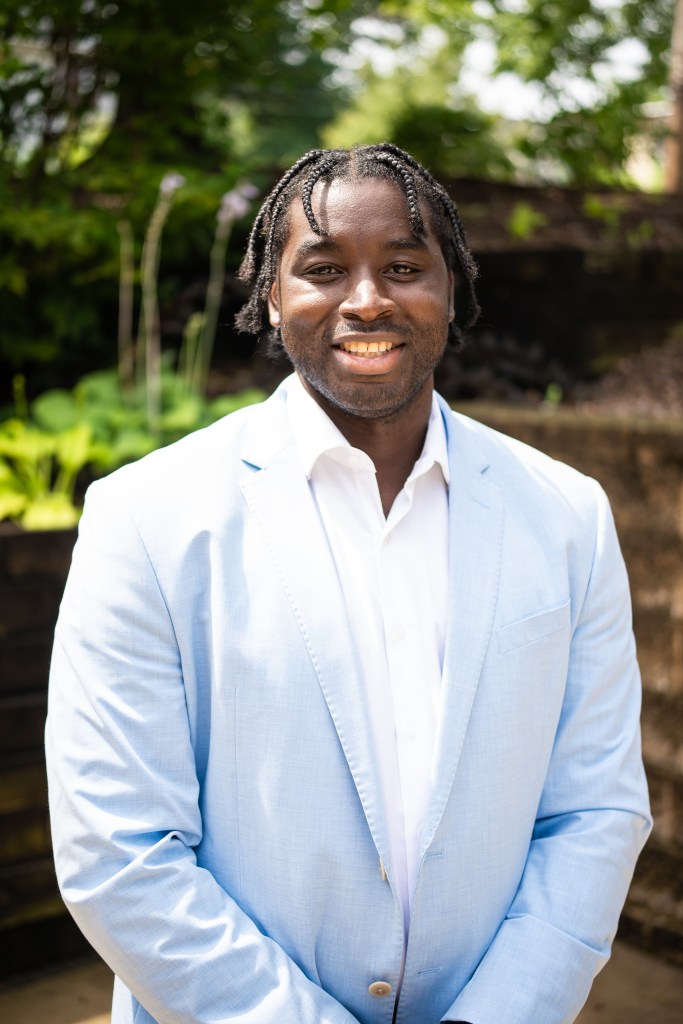
We started with Texas, of course. Because if you know anything about Texans, you know they’re going to let you know where they’re from. He talked about growing up in Beaumont, about basketball culture, about being under-recruited and finding his lane at Grand View University here in Des Moines. What stood out to me was that he didn’t romanticize the journey. He talked about being a late bloomer. About grinding. About chasing the goal of simply getting paid to do what he had worked so hard at.
And then the pivot came.
March 2020. The world shuts down. A second season of professional basketball in Indonesia suddenly isn’t the plan anymore. And just like that, the identity he had built around being an athlete had to shift.
We don’t talk enough about that kind of grief.
Not the dramatic grief. The quiet one. The “who am I now?” grief.
Athletes go through it. Divorced women go through it. People who lose jobs go through it. Parents when their kids grow up go through it. When the role you’ve mastered changes, there’s a gap between who you were and who you’re becoming. That gap can feel like a crisis.
Jjuan named it plainly — an identity crisis.
And I appreciated that, because I think so many of us experience those shifts but don’t give ourselves permission to call them what they are.
From there, we moved into his work at Change Course, where he serves as a career coach and partnership director. He works with people who have been previously incarcerated, people recovering from addiction, and individuals navigating generational poverty. When he described his role, he said something that stuck with me: they walk alongside people while they change their own lives.
That distinction matters.
He isn’t “saving” anyone. He isn’t rescuing. He’s asking questions. He’s restoring dignity. He’s reminding people that their past doesn’t define them.
As someone working in education with students who are often on their second (or third) chance, that resonated deeply. There’s something sacred about meeting people where they are without trying to fix them into your version of success.
We also talked about friendship — real friendship. The kind that spans decades. The kind that doesn’t skip a beat even if years pass. He shared about an episode where he interviewed six of his childhood friends from Beaumont, and how meaningful that was for him. And I felt that in my bones.
Because long-term friendship is rare. It’s holy, honestly. To be known over time. To be seen in your awkward middle school phase and your grown adult phase and still be loved the same. That kind of connection keeps you tethered when life tries to knock you loose.
And then we got to podcasting.
His show, The Minds with Hakeem, focuses on health, wealth, and knowledge. He started it during the pandemic, during that identity shift, during a time when the world felt divided and uncertain. He said he wanted to learn faster — to sit across from experts and have conversations that stretched him.
That part felt familiar to me.
There’s something about podcasting that feels like both service and therapy. You amplify other people’s voices, but you’re also processing your own evolution in real time. I asked him if some of the conversations he’s having now are conversations he wishes he could have had with his younger self. His answer wasn’t simple — some yes, some no — but the heart of it was this: we connect more in our failures than in our successes.
That line.
We connect more in our failures than in our successes.
Not in the polished moments. Not in the highlight reels. But in the parts where we admit we didn’t make the NBA. Or we got divorced. Or we didn’t know what we were doing next.
The lightning round was fun — as it always is — and yes, he’s a Cowboys fan and yes, I reminded him I’m a Packers fan. Balance. We believe in balance over here.
But what I’ll carry from this conversation is his final takeaway: nobody wins when the family feuds.
In a world that feels increasingly divided — politically, socially, racially — he challenged us to refuse to let ourselves be boxed in by stereotypes. To speak truth in love. To defy expectations in the right way. To build unity where we can, even when we disagree.
That’s not soft. That’s hard work.
And it’s necessary work.
This conversation reminded me that reinvention is not failure. That identity shifts don’t mean you’ve lost yourself — sometimes they mean you’re expanding. That leadership isn’t always loud. And that asking for help is a strength, not a weakness.
If you haven’t yet, go check out The Minds with Hakeem. And as always, thank you for being here — for reading, listening, supporting, and growing alongside me.
Stay Connected with Black. Girl. Iowa.
Want to be part of the Black. Girl. Iowa. journey? Here’s how you can stay connected and support the movement:
📱 Follow along on social
Join the conversation and community on Instagram and TikTok:
@blackgirliowa
🛍️ Shop the BlackGirlIowaShop
Explore journaling kits, merch, and creative tools designed to inspire:
Visit my Etsy store
🎧 Tune in to the podcast
Listen wherever you stream — Spotify, Apple Podcasts, Amazon Music, iHeartRadio, Pandora, or YouTube.
Just search Black. Girl. Iowa.
✉️ Subscribe to the blog
Get reflections, updates, and new stories delivered straight to you:
www.blackgirliowa.com
 Black. Girl. Iowa.