
In August 2022, I became an official member of Corinthian Baptist Church. At the time, my parents had been members for over a decade. After leaving my ex-husband and filing for divorce, I started attending service with them every Sunday. I found comfort in the messages from our pastor, the music of the choir, and the sense of community within the sanctuary.
It might come as a surprise, but I didn’t grow up in the church. There was a brief time when we went weekly, but that didn’t last long—maybe a year. My parents were both raised Baptist, but my sister and I were baptized as Methodist and encouraged to explore religion on our own terms. My sister, before her passing in 2016, converted to Catholicism in 2015 and found peace in her faith. That has always stuck with me.
As for me—I used to give the classic line: “My relationship with God is personal.” But if I’m honest, I didn’t actually have a relationship with Him. I rarely talked to God. Sundays were more about rest, relaxation, and football than faith. Before joining Corinthian, the last time I’d opened a Bible was during a college course called “Jesus,” where we studied the Gospels—Matthew, Mark, Luke, and John.
My relationship with God began to grow for a little over a year. Then, I stopped going to church. A domestic situation with my ex-boyfriend left me feeling raw and withdrawn. I didn’t want to be seen or heard from by my church community. I needed space to heal. Between that, the emotional weight of a breakup, finishing grad school, and working on my relationship with my parents—I didn’t feel like church was where I could fully show up and receive the word.
Fast forward a year later—I’m back at church. It started with attending a funeral, followed by a Mother’s Day service. Now I’m up every Sunday, dressed and out the door by 9:45 AM for service.
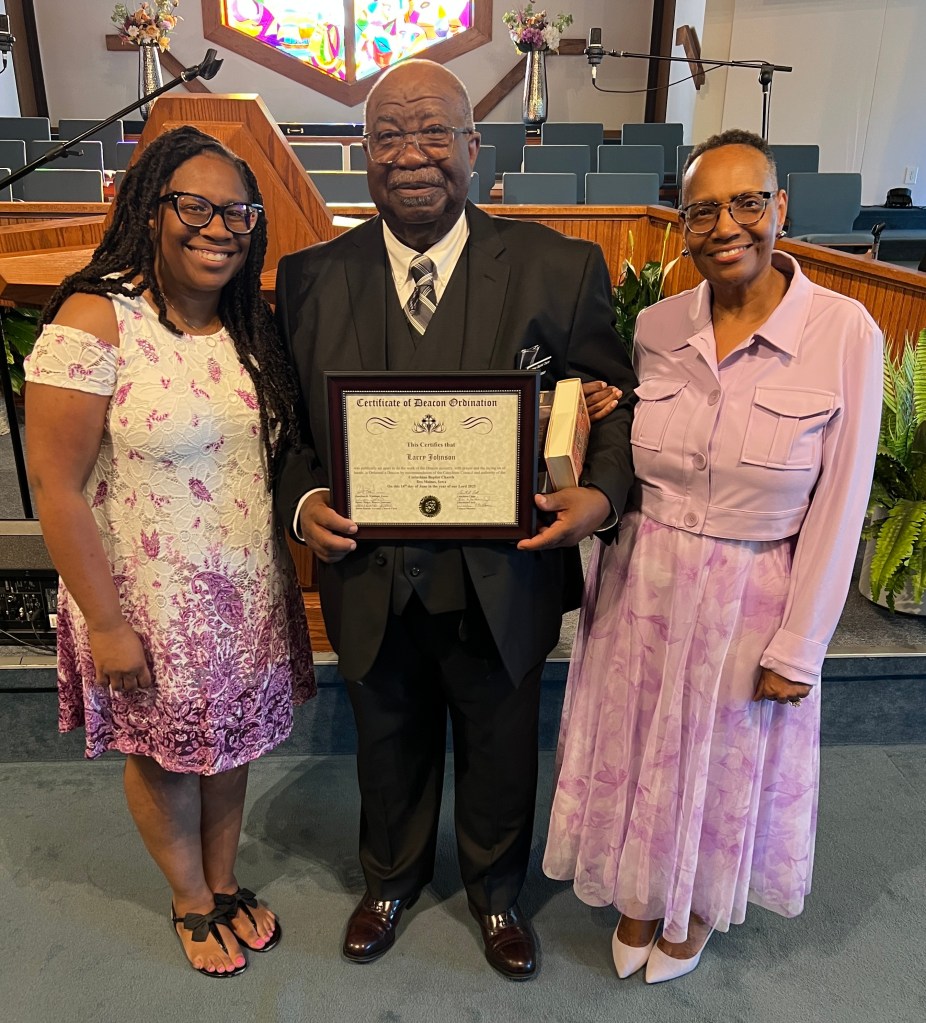
This past weekend, I got to witness something beautiful: my dad’s deacon ordination. It was a powerful and emotional ceremony. Watching him step into this leadership role made me realize how deeply he lives by the principles of faith, family, and service. His commitment inspired me to think more intentionally about how I want to show up—not just as a member of the congregation, but as someone rebuilding a real relationship with God and applying His teachings to my daily life.
But I’ll be real—this journey has also brought unexpected challenges. One of the hardest things has been trying to talk about my spiritual growth with people who don’t believe. I’ve never been one to judge or preach, but I assumed that people who care about me would respect the path I’m walking. I was wrong. I had a conversation with someone close to me that left me feeling judged, confused, and in tears.
Reflecting on it now, I realize this: No one has the right to question or mock my journey. My faith is mine. I welcome respectful dialogue about religion, spirituality, and belief—but I refuse to let anyone belittle me or make me feel small for the direction I’m heading.
I’m still learning, growing, and figuring it all out. Here are a few things helping me along the way:
- The Holy Bible – Study Bible
- The Bible in 52 Weeks by Dr. Kimberly D. Moore
- A good notebook (of course)
I’ll share updates as I continue my journey and discover new materials and resources.
If you’ve made it this far—thank you. I’d love to hear from you:
What does spiritual growth look like for you?
How do you stay connected to your beliefs?
How do you respond when someone questions your faith or path?
Let’s keep the conversation open and honest.
-Emili
 Black. Girl. Iowa.